
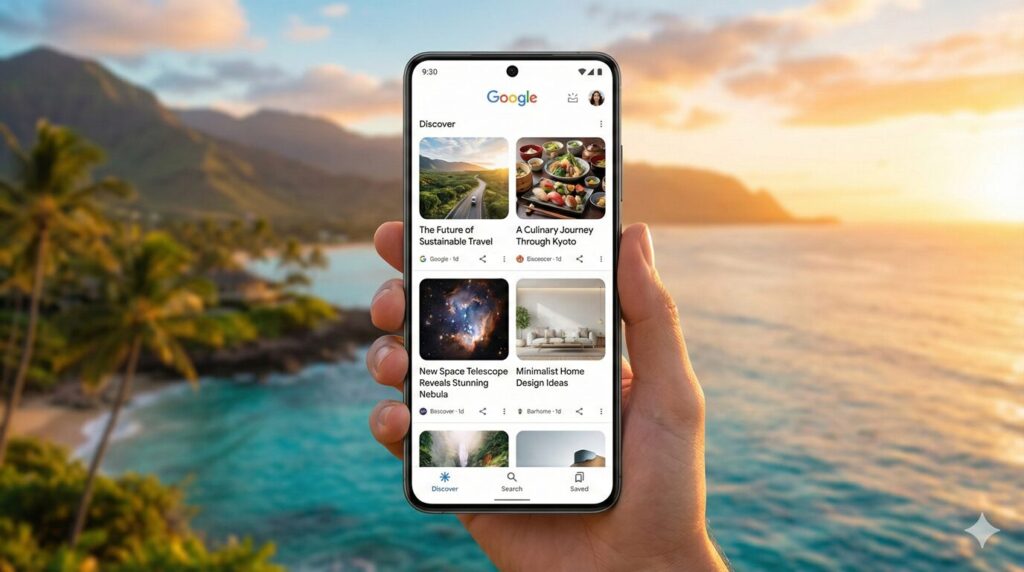
If you rely on organic traffic to fuel your business growth, the middle of February 2026 likely brought a few surprises to your analytics dashboard. Google recently rolled out a historic algorithm shift: the February 2026 Discover Core Update.
For the first time, Google released a broad core update exclusively targeting Google Discover, the personalised, predictive feed that serves content to millions of mobile users before they even type a search query.
Whether you are a Business Owner, a Growth Hacker, a Head of Sales, or an SEO Strategist, understanding this shift is crucial. Discover is no longer just a “bonus” traffic source; it is a primary top-of-funnel channel. Here is everything you need to know about what changed, how it impacts your bottom line, and how to turn this update into a competitive advantage for your brand.
What Is the February 2026 Discover Core Update?
While traditional search updates focus on keyword rankings and query matching, this specific update is entirely about recommendation quality. It aims to refine how Google selects and presents content in the Discover feed, making it more useful, relevant, and trustworthy for the end user.
Initially rolling out to English-language users before expanding globally, the update acts as a sophisticated filter. It is designed to sweep away lightweight, sensationalist content and elevate high-quality, authentic storytelling and expert insights. For digital marketers and agencies, this signals a permanent shift from volume-based content farming to value-driven brand journalism.
How It Affects Your Business
This update fundamentally changes the rules of engagement. Here are the three main ways it impacts your digital strategy:
1. Local Relevance Takes Centre Stage
Google is now heavily prioritising locally relevant content. If your website is based in the UK, Nigeria, or the US, your content is now significantly more likely to be shown to users in that specific region.
For local businesses: This is a massive win. You now have a much better chance of reaching potential customers in your immediate market, which naturally increases your conversion rates.
For international publishers: You can no longer rely on a one-size-fits-all global strategy. You must demonstrate genuine local context, perhaps by segmenting your content or highlighting regional case studies, to maintain visibility across different countries.
2. The End of the Clickbait Era
We all know the headlines: “You Won’t Believe What Happened Next!” Google’s new algorithm actively demotes sensationalism, curiosity gaps, and artificially inflated engagement. If your headline promises drama but the article delivers fluff, your entire domain’s trust score could take a hit. Honest, descriptive titles are now the gold standard.
3. Topic-by-Topic Expertise
In the past, a high-authority website could rank for almost anything. Now, Google evaluates your expertise on a topic-by-topic basis. This is a game-changer for niche businesses. You no longer need to compete with massive, multi-topic media giants. If your firm specialises in cybersecurity, and you publish comprehensive, expert-led guides on data protection, Google’s systems will recognise you as an authority in that specific lane.
Note: If you run a B2B software blog and suddenly publish a random lifestyle article to catch a trend, Discover will likely ignore it. However, if you consistently publish deep, well-researched content about lead generation, you will be heavily rewarded in that specific niche.
How to Get Ahead and Make the Most of It
A core update is not a penalty; it is an opportunity to outpace competitors who are slow to adapt. Here is how you can tweak your strategy to thrive in this new landscape:
1. Double Down on Your Niche
Stop trying to be everything to everyone. Build topical authority by creating deep, original, and insightful content in your specific area of expertise. Showcase real human experience and case studies that AI simply cannot replicate.
2. Write Honest, Clear Headlines
Your titles must accurately reflect the substance of your article. Focus on clarity and value rather than cheap hooks. For a Head of Sales, this means attracting high-intent readers who will actually stay on the page, build trust with your brand, and eventually convert.
3. Optimise for Visuals
Discover is a highly visual feed. Ensure every blog post features a compelling, high-resolution featured image. Google explicitly recommends that large images need to be at least 1200 pixels wide and enabled by the max-image-preview:large setting to increase your chances of being featured.
4. Prioritise Mobile Page Experience
This is a direct call to Website Designers. Discover traffic is almost entirely mobile. If your website is slow, bloated, or difficult to navigate on a phone, Google will not recommend it. Ensure your site loads at lightning speed and offers a seamless user journey.
The Bottom Line
The era of chasing hollow clicks is over. The February 2026 Discover Core Update is a clear signal that Google wants to reward genuine expertise, local relevance, and exceptional user experiences. By aligning your strategy with these principles, you can turn Google Discover into a powerful engine for high-intent traffic and sustainable business growth.