
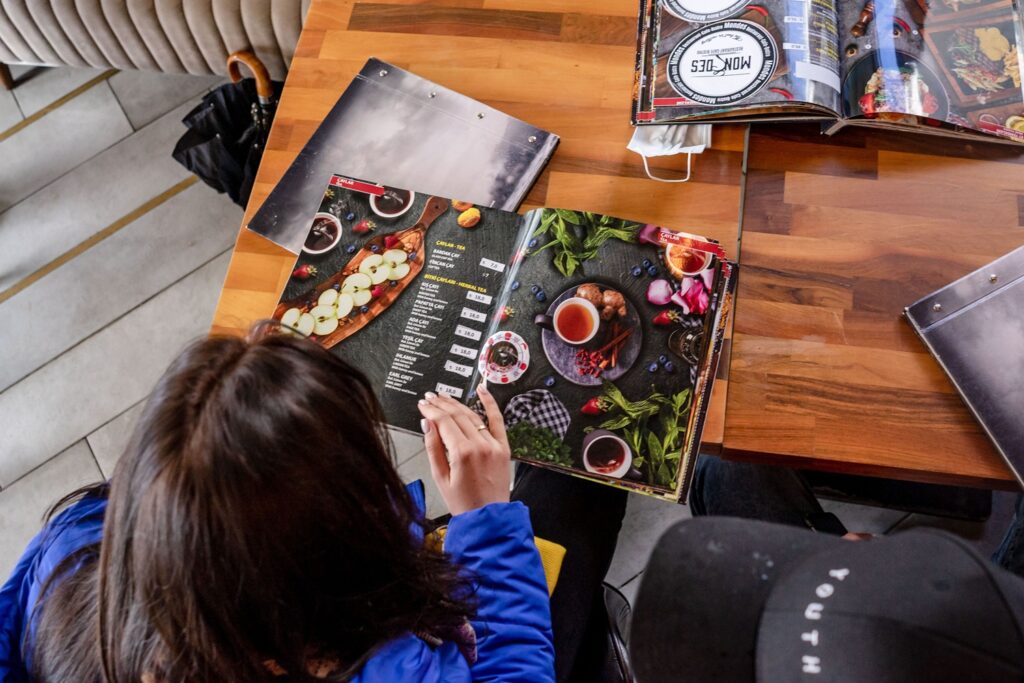
Have you ever visited a restaurant, opened the menu, and found yourself ordering something you had not planned to eat? It may not have been a coincidence.
Beyond listing available meals and their prices, a menu is a powerful marketing tool. The way it is designed can influence what customers notice first, how they perceive the value of a meal, and what they eventually decide to order.
This is where menu psychology comes in.
The Power of First Impressions
A restaurant menu is often one of the first physical or digital touchpoints a customer interacts with. Before tasting the food or experiencing the service, customers begin forming opinions about the restaurant based on its presentation.
A well designed menu communicates quality, personality, and professionalism. A poorly structured one can make even an excellent restaurant appear less appealing.
The goal is not simply to make a menu beautiful. It is to make choosing a meal an enjoyable and straightforward experience.
1. Visual Hierarchy Directs Attention
Customers rarely examine every item on a menu with equal attention. They scan headings, prices, descriptions, and highlighted sections before deciding what interests them.
Through visual hierarchy, designers can guide this attention.
A signature meal might receive a prominent position, a distinctive heading, or a subtle visual highlight. Popular dishes can be grouped into clearly defined sections, making them easier to discover.
However, emphasis should be used carefully. Highlighting too many items defeats the purpose because nothing stands out.
2. Colours Influence Perception
Colour plays an important role in how customers perceive a restaurant and its offerings.
Warm colours such as red, orange, and yellow are commonly associated with energy, warmth, and appetite appeal. Green can suggest freshness or natural ingredients, while darker tones may communicate sophistication and exclusivity.
These associations are not universal rules. Their effectiveness depends on the restaurant’s identity, audience, cuisine, and overall presentation.
A fine dining restaurant, for example, may benefit from an understated palette and generous white space, while a casual food spot might use brighter colours and more expressive graphics.
The key is consistency between the menu’s appearance and the experience the restaurant promises.
3. Descriptions Make Meals More Appealing
Compare these two descriptions:
“Grilled chicken and rice.”
“Smoky grilled chicken served with fragrant seasoned rice and a rich house sauce.”
Both may describe a similar meal, but the second gives customers a clearer picture of the experience they can expect.
Thoughtful descriptions can make dishes more memorable and help customers understand what makes them special. They are particularly useful when communicating signature ingredients, preparation methods, portion details, or the restaurant’s unique approach.
The description must remain honest. Attractive language should enhance the truth, not create expectations the kitchen cannot meet.
4. Pricing Presentation Shapes Value Perception
How prices appear on a menu can affect how customers evaluate their options.
For example, a menu that places every price in a rigid column may encourage customers to compare prices quickly. A more integrated layout can encourage them to consider the dish, its ingredients, and its description alongside the cost.
This does not mean hiding prices or making customers work to find them. Transparent pricing builds trust.
Instead, the goal is to present prices clearly while helping customers understand the value of what they are buying.
5. Layout Reduces Decision Fatigue
A menu with too many items, inconsistent formatting, or poorly organised categories can overwhelm customers.
When diners struggle to find what they want, ordering becomes less enjoyable.
A clear layout separates categories such as starters, main courses, sides, drinks, and desserts. Consistent typography, readable text, appropriate spacing, and a logical flow make the menu easier to navigate.
For digital menus, mobile readability is especially important. Customers should not have to zoom repeatedly or scroll through an unnecessarily complicated design to place an order.
6. Strategic Highlighting Can Support Sales
Restaurants often have dishes they want customers to discover, whether because they are signature meals, seasonal specials, or particularly representative of the brand.
Design can help bring these items to attention through subtle callouts, photographs, or dedicated sections.
The important distinction is that highlighting should help customers discover relevant options, not manipulate them into purchasing something unsuitable.
The Bigger Picture
An effective menu brings together design, customer psychology, pricing strategy, food photography, and the restaurant’s brand identity.
When these elements work together, the menu becomes more than a list of available meals. It becomes part of the dining experience and a practical tool for communicating value.
For restaurant owners, the question is not simply whether the menu looks attractive. It is whether customers can understand it, connect with the offerings, and confidently make a choice.
Because sometimes, the difference between a menu customers browse and one that helps them order confidently lies in the design.